Digital Twin Technology in Construction Plants: Transforming the Future of Industrial Engineering
The construction and plant engineering industry is undergoing a massive digital transformation. Among the most powerful innovations driving this change is Digital Twin Technology. From large construction plants to complex industrial facilities, digital twins are redefining how projects are designed, built, monitored, and maintained.
In today’s competitive environment—where cost control, safety, sustainability, and efficiency are critical—digital twin technology has become a game-changer for construction plants worldwide.
What Is Digital Twin Technology?
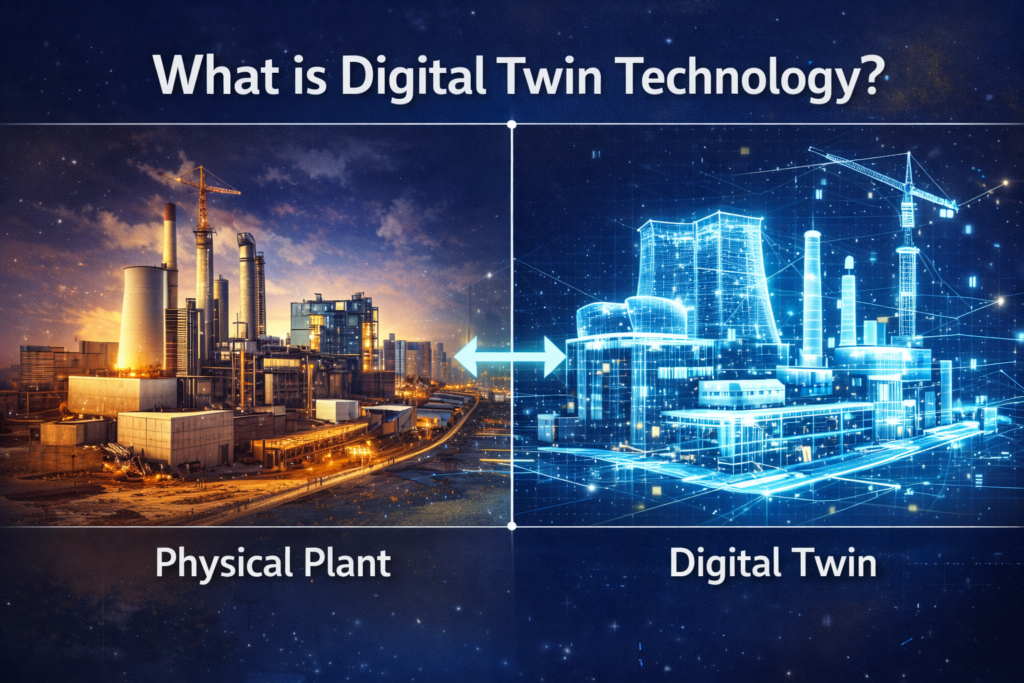
A Digital Twin is a virtual replica of a physical asset, system, or entire construction plant. It continuously receives real-time data from sensors, machines, and control systems installed on the actual site. This digital model mirrors the real plant’s behavior, performance, and condition throughout its lifecycle.
Unlike traditional 3D models, a digital twin is dynamic and intelligent. It evolves with live data, allowing engineers and managers to simulate, predict, and optimize plant operations before making real-world decisions.
Why Digital Twin Technology Matters in Construction Plants
Construction plants are complex environments involving heavy machinery, electrical systems, mechanical equipment, pipelines, utilities, and workforce coordination. Even a small design or operational error can lead to delays, safety risks, and cost overruns.
Digital twin technology helps construction plants by:
- Reducing project risks
- Improving planning accuracy
- Enhancing operational efficiency
- Lowering maintenance costs
- Increasing worker safety
How Digital Twin Technology Works in Construction Plants
Digital twin systems work through the integration of multiple technologies:
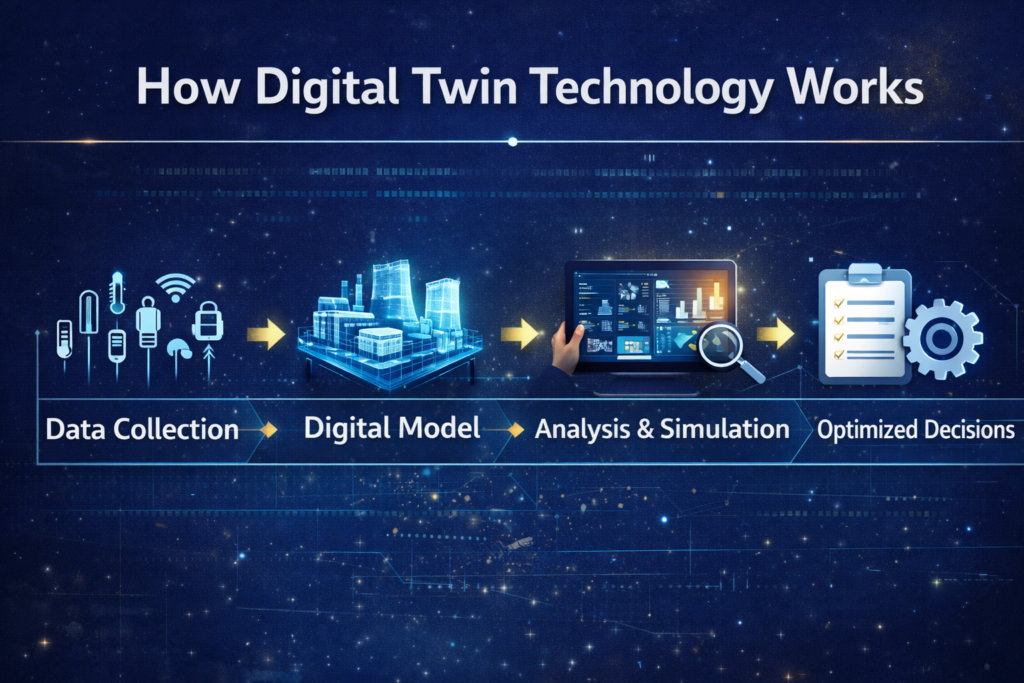
1. Data Collection
Sensors, IoT devices, drones, and smart equipment collect real-time data related to:
- Temperature
- Vibration
- Energy consumption
- Equipment performance
- Structural health
2. Digital Modeling
Using BIM models, CAD designs, and engineering drawings, a virtual model of the construction plant is created.
3. Real-Time Synchronization
Live data feeds continuously update the digital twin, ensuring the virtual model behaves exactly like the physical plant.
4. Analytics and Simulation
Advanced analytics, AI, and machine learning tools analyze data to:
- Predict failures
- Simulate construction sequences
- Optimize resource usage
- Improve decision-making
Key Applications of Digital Twin Technology in Construction Plants
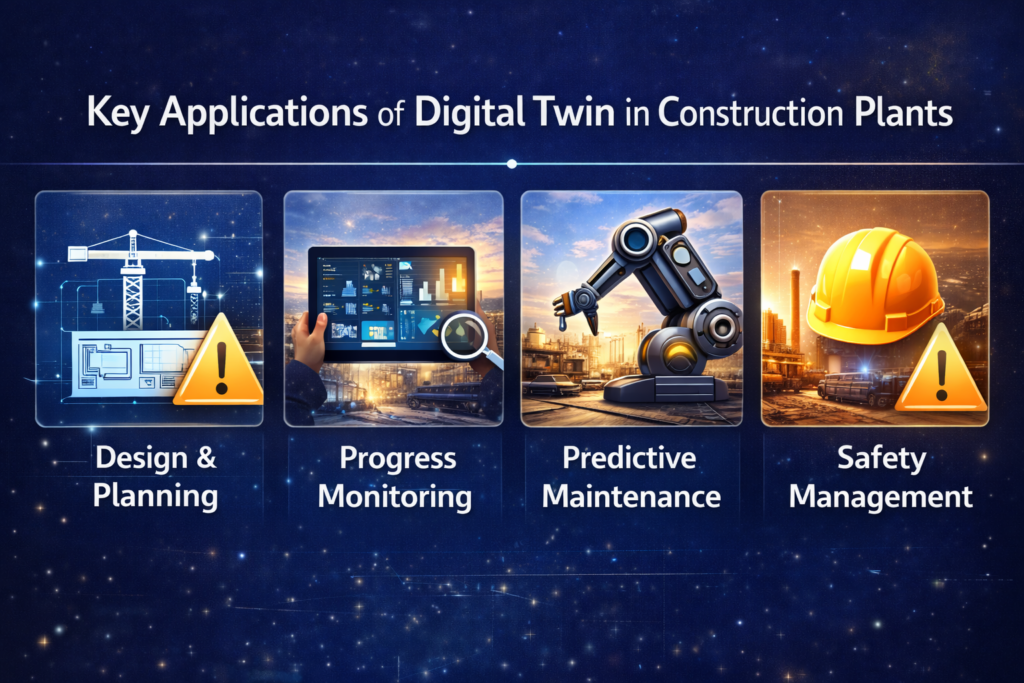
1. Design and Planning Optimization
Digital twins allow engineers to test multiple design scenarios before construction begins. Structural layouts, equipment placement, and material flow can be optimized digitally, reducing costly design changes later.
2. Construction Progress Monitoring
Project managers can track real-time progress against schedules. Delays, inefficiencies, and bottlenecks are identified early, improving project delivery timelines.
3. Equipment Performance and Maintenance
Digital twins monitor equipment health continuously. Predictive maintenance alerts help prevent breakdowns, reducing downtime and extending equipment life.
4. Safety Management
By simulating hazardous scenarios, digital twins help identify safety risks before they occur. This significantly reduces accidents and improves compliance with safety standards.
5. Energy and Sustainability Management
Construction plants consume significant energy. Digital twins analyze energy usage patterns and suggest optimization strategies, supporting sustainability and cost reduction.
Industrial Benefits of Digital Twin Technology
Improved Efficiency
Real-time insights enable better coordination of labor, machinery, and materials.
Cost Reduction
By preventing errors, minimizing rework, and optimizing maintenance, digital twins reduce overall project costs.
Predictive Decision-Making
Instead of reacting to problems, construction managers can predict outcomes and take preventive action.
Enhanced Collaboration
All stakeholders—designers, engineers, contractors, and owners—can work on a single, data-driven digital platform.
Lifecycle Asset Management
Digital twins remain valuable even after project completion, supporting long-term plant operation and maintenance.
Digital Twin vs Traditional Construction Management
| Traditional Methods | Digital Twin Technology |
|---|---|
| Static drawings | Live, real-time models |
| Reactive maintenance | Predictive maintenance |
| Manual inspections | Sensor-driven insights |
| Limited visibility | Full plant transparency |
| Higher risk | Reduced uncertainty |
Role of AI and IoT in Digital Twin Systems
Digital twin technology becomes truly powerful when combined with:
- Artificial Intelligence (AI) for pattern recognition and predictions
- Internet of Things (IoT) for real-time data capture
- Cloud Computing for scalability
- Big Data Analytics for performance optimization
Together, these technologies enable smart, self-learning construction plants.
Challenges in Implementing Digital Twin Technology
Despite its advantages, implementation requires:
- High initial investment
- Skilled digital workforce
- Data security and integration planning
- Change management across teams
However, long-term benefits far outweigh the initial challenges.
Future of Digital Twin Technology in Construction Plants
The future is strongly digital. With increasing adoption of Industry 4.0 practices, digital twins will become standard in construction and plant engineering. Upcoming trends include:
- AI-powered autonomous construction planning
- Integration with robotics and automated equipment
- Advanced sustainability and carbon tracking
- Fully connected smart construction ecosystems
Digital twins will not just support construction plants—they will define how plants are built and operated.