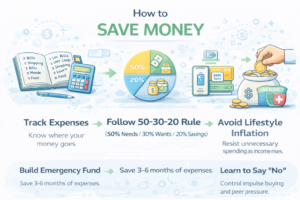
How to Save Money and Earn Money – A Beginner’s Guide
Starting a career—whether in a job or a business—is exciting but confusing. Many people earn well but struggle financially, while others grow steadily with average income. The difference is financial discipline and smart planning.
Why Saving and Earning Both Are Important
- Income is money coming in
- Expenses are money going out
- Uncontrolled spending creates financial stress
- Saving builds long-term security
Part 1: How to Save Money (Even with Low Income)
1. Track Your Expenses
- Write daily and monthly expenses
- Identify unnecessary spending
- Small expenses add up quickly
Track Your Expenses & Take Control of Your Money 💰 (Save Money and Earn)
This is the foundation. If you don’t know where your money is going, you can’t control it.
✍️ Write Daily and Monthly Expenses (Save Money and Earn)
Start simple.
Daily Expenses → Tea, snacks, auto fare, online orders, recharge, small UPI payments.
Monthly Expenses → Rent, electricity bill, groceries, EMI, mobile bill, subscriptions.
You can:
- Use a small notebook
- Maintain an Excel sheet
- Or use a free expense tracking app
The goal is not perfection — it’s awareness.
📊 Real Example of Hidden Spending (Save Money and Earn)
| Item | Amount |
|---|---|
| Tea (₹20 × 2 × 30 days) | ₹1,200 |
| Online food (4 times) | ₹2,000 |
| Random Amazon buys | ₹1,500 |
Suddenly ₹4,000–₹5,000 disappears without you realizing 😅
🔍 Identify Unnecessary Spending
Once everything is written down, ask:
- Did I really need this?
- Was this planned?
- Did it improve my life or just satisfy a moment? (Save Money and Earn)
Common unnecessary expenses:
- Daily outside snacks
- Impulse online shopping
- Extra subscriptions (OTT, apps)
- Upgrading phone too often
- Frequent cab instead of public transport
This doesn’t mean stop enjoying life.
2. Follow the 50–30–20 Rule
- 50% for needs (rent, food, transport)
- 30% for wants (shopping, entertainment)
- 20% for savings or investment
50–30–20 Rule 👌
This rule is basically a money-management formula. Whatever your monthly income is, divide it into three parts. Not complicated. Just structured.
🏠 50% Needs
Essentials you must pay no matter what.
🎉 30% Wants
Lifestyle & enjoyment spending.
💰 20% Savings
Your future security & growth.
🏠 50% for Needs (Essentials)
- Rent
- Groceries
- Electricity
- Transport
- Basic mobile recharge
- EMI (if unavoidable) Save Money and Earn
🎉 30% for Wants (Lifestyle)
- Eating out
- Shopping
- OTT subscriptions
- New clothes
- Gadgets
- Movies, trips
This category prevents burnout. Enjoy life — but within limits.
💰 20% for Savings / Investment
- Emergency fund
- Fixed deposits
- SIP / Mutual funds
- Gold
- Retirement fund
- Skill development
In 1 year → ₹48,000
⚡ What If Income Is Very Low?
Or even 80–15–5
The percentage doesn’t matter. The habit does.
🎯 Why This Rule Works (Save Money and Earn)
- Gives clarity
- Removes guilt from spending
- Ensures consistent saving
- Prevents lifestyle overspending
- Makes money organized instead of emotional
3. Avoid Lifestyle Inflation
- Do not increase expenses with income
- Avoid unnecessary upgrades
- Financial peace matters more than show-off
Lifestyle Inflation 😬
Lifestyle inflation means the moment your income increases, your expenses also increase.
Better phone
More eating out
Branded clothes
Bigger EMI
Costlier rent
Income increased… but savings stayed the same.
💼 Do Not Increase Expenses with Income
When you start earning more, your first reaction shouldn’t be:
“Now I can spend more.”
It should be:
“Now I can save more.”
Upgrade lifestyle: ₹1,500
Save/Invest: ₹3,500
That difference quietly builds wealth.
Income ↑ → Savings ↑
Income ↑ → Expenses ↑
📱 Avoid Unnecessary Upgrades
- Phone works fine, but new model launched
- Bike is okay, but colleague bought new one
- Clothes are enough, but sale is running
- House is comfortable, but bigger one looks better
Is this upgrade improving my life?
Or just feeding my ego?
🧘 Financial Peace > Show-Off
- No tension about bills
- Emergency fund ready
- No credit card stress
- Sleeping peacefully
- EMI pressure
- Social media validation
- Looking rich but feeling stressed
A simple life with strong savings is more powerful than a flashy life with zero backup.
4. Build an Emergency Fund (Save Money and Earn)
- Save 3–6 months of expenses
- Keep money easily accessible
- Reduces stress during emergencies
5. Learn to Say No
- No impulse buying
- No peer pressure spending
- Focus on priorities
Part 2: How to Earn Money (Job + Business)
1. Start with a Job (Save Money and Earn)
- Provides stable income
- Builds experience and skills
- Opens future opportunities
2. Invest in Skills (Save Money and Earn)
- Skills earn faster than degrees
- Learn problem-solving abilities
- Upgrade skills continuously
3. Create Multiple Income Sources
- Freelancing or part-time work
- Skill-based online income
- Reduces financial risk
4. Think Long-Term (Business Mindset)
- Start small and test ideas
- Learn from mistakes
- Consistency beats speed
5. Reinvest Your Earnings
- Improve skills and tools
- Build long-term growth
- Let money work for you
Common Mistakes to Avoid
- Spending more than income
- Ignoring savings early
- Taking unnecessary loans
- Comparing your journey with others
Simple Daily Habits That Build Wealth
- Review expenses weekly
- Save before spending
- Learn something new daily
- Stay patient and disciplined
Get Latest Job Alerts
Click below to unlock Grand Diwali Celebration & join our WhatsApp channel.
India’s trusted platform for daily verified construction jobs.
🚧 100% Free. No Agents. Genuine Opportunities.
Adani Power Recruitment Drive 2026 | Walk-In Opportunity for Thermal Power Project in Assam