As industries across the world look for cleaner, safer, and more sustainable energy solutions, Hydrogen Technology is emerging as a powerful game-changer. From steel plants and refineries to power generation and chemical industries, hydrogen is no longer just a future concept—it is becoming a practical industrial energy solution.
In simple words, hydrogen technology helps industries reduce carbon emissions, improve energy efficiency, and move toward sustainable operations without compromising productivity.
What Is Hydrogen Technology? (Simple Explanation)
Hydrogen technology involves producing, storing, and using hydrogen gas as an energy source or raw material in industrial plants. When hydrogen is used as fuel, it produces only water vapor as a by-product, making it one of the cleanest energy carriers available.
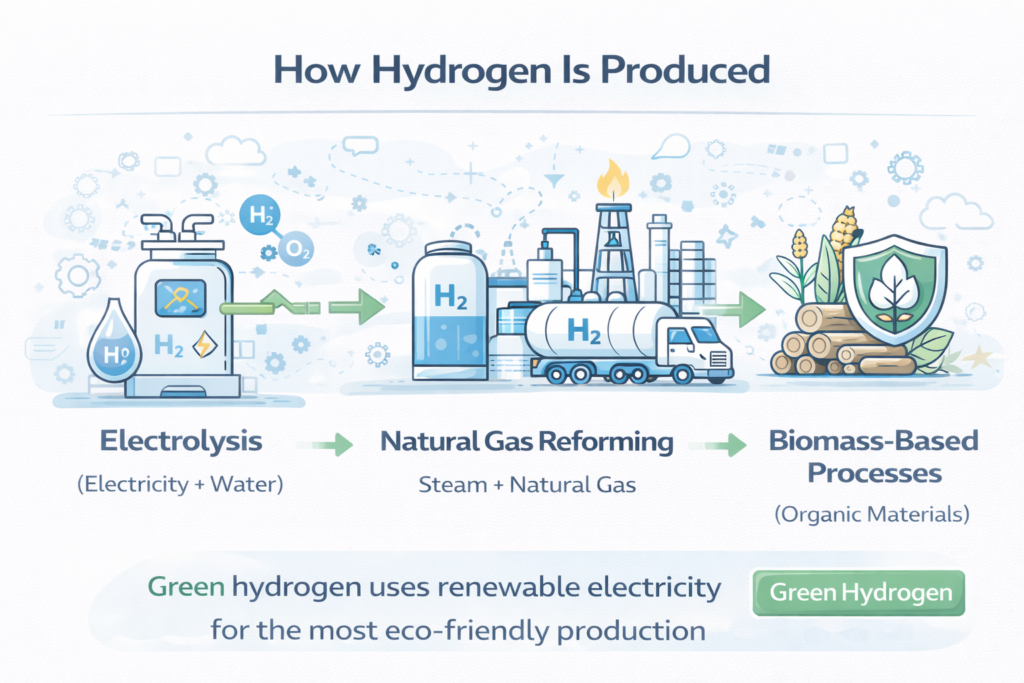
Hydrogen can be produced using different methods, such as:
- Electrolysis (using electricity and water)
- Natural gas reforming
- Biomass-based processes
Among these, green hydrogen (produced using renewable electricity) is the most environment-friendly option.
Why Hydrogen Technology Is Important for Industries
Industrial plants consume massive amounts of energy and are responsible for a large share of global carbon emissions. Traditional fuels like coal, diesel, and natural gas increase pollution and operating costs.
Hydrogen technology helps industries by:
- Reducing dependence on fossil fuels
- Meeting environmental regulations
- Supporting long-term sustainability goals
- Improving energy security
Key Features of Hydrogen Technology in Industrial Plants
1. Clean Energy Source
Hydrogen produces zero carbon emissions at the point of use, making it ideal for clean industrial operations.
2. High Energy Efficiency
Hydrogen has a high energy content by weight, which makes it suitable for energy-intensive industrial processes.
3. Flexible Industrial Use
Hydrogen can be used for:
- Power generation
- Industrial heating
- Chemical processing
- Energy storage
4. Compatibility with Existing Infrastructure
Many industrial systems can be modified to use hydrogen with limited changes, reducing transition costs.
5. Integration with Renewable Energy
Hydrogen acts as an energy storage medium for solar and wind power, ensuring continuous plant operation even when renewable energy supply fluctuates.
How Hydrogen Technology Works in Industrial Plants
- Hydrogen Production
Hydrogen is generated on-site or supplied through pipelines or transport systems. - Storage and Distribution
Hydrogen is stored in pressurized tanks or underground systems and distributed safely within the plant. - Energy Conversion or Industrial Use
Hydrogen is used in burners, turbines, boilers, fuel cells, or as a raw material in industrial processes. - Emission-Free Output
The final output is clean energy or industrial products with minimal environmental impact.
Industrial Applications of Hydrogen Technology
Steel and Metal Industries
Hydrogen is used as a reducing agent, replacing coal-based processes and significantly cutting emissions.
Chemical and Fertilizer Plants
Hydrogen is a key raw material in ammonia, methanol, and other chemical production processes.
Refineries and Petrochemical Plants
Hydrogen improves fuel quality and supports cleaner refining operations.
Power Generation Plants
Hydrogen-fired turbines and fuel cells generate electricity with low or zero emissions.
Manufacturing and Process Industries
Used for high-temperature heating, backup power, and clean energy supply.
Benefits of Hydrogen Technology in Industrial Plants
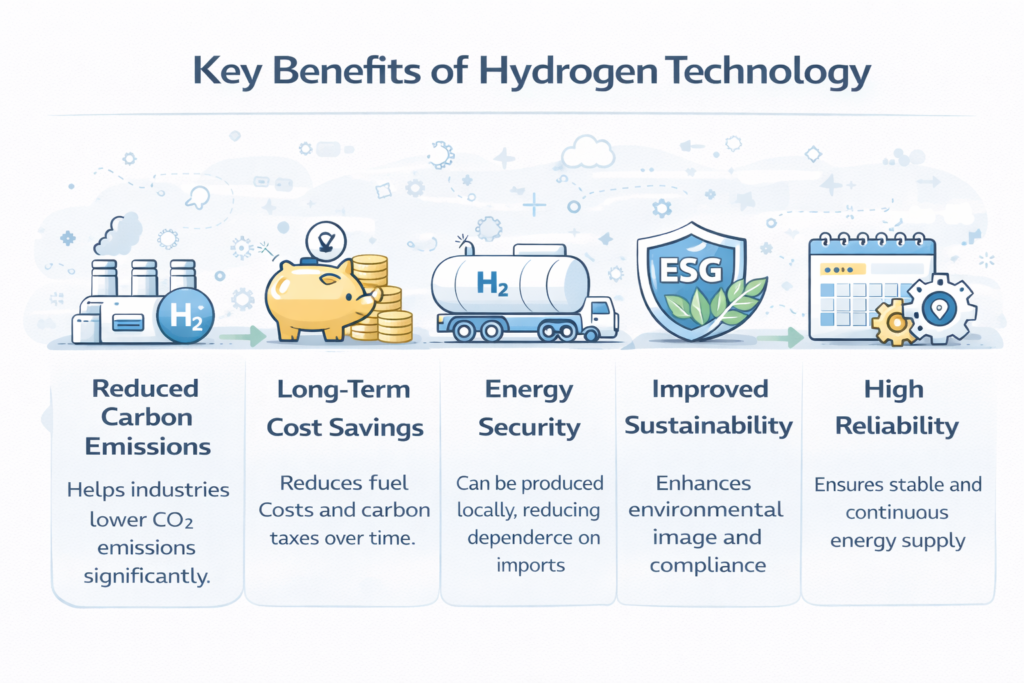
1. Reduced Carbon Emissions
Hydrogen helps industries meet climate targets by lowering CO₂ emissions significantly.
2. Long-Term Cost Savings
Although initial investment is high, hydrogen reduces fuel costs and carbon taxes in the long run.
3. Energy Security
Hydrogen can be produced locally, reducing dependence on imported fuels.
4. Improved Corporate Sustainability
Industries using hydrogen enhance their environmental image and ESG compliance.
5. Future-Ready Technology
Hydrogen positions industrial plants for future energy regulations and market demands.
6. High Operational Reliability
Hydrogen-based systems provide stable and continuous energy supply.
Challenges in Using Hydrogen Technology
Despite its advantages, hydrogen technology faces some challenges:
- High initial investment cost
- Storage and transportation complexity
- Safety management requirements
- Limited large-scale infrastructure
However, rapid technological advancements and government support are reducing these challenges every year.
Future of Hydrogen Technology in Industrial Plants
The future of industrial energy is strongly linked to hydrogen. With growing focus on decarbonization and net-zero targets, hydrogen will play a central role in:
- Smart industrial plants
- Green manufacturing
- Low-carbon supply chains
- Sustainable power generation
As technology matures, hydrogen will become more affordable, safer, and widely adopted.